
Research
RNA biology and neurological genetics
Dr. Mohammad Ali Faghihi’s work connects basic mechanisms of gene regulation with questions in neurological and inherited disease.
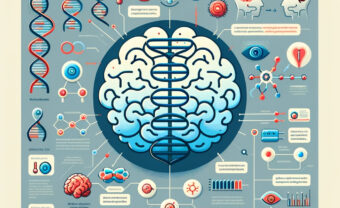
Natural antisense transcripts
Natural antisense transcripts are RNA molecules produced from the strand opposite another gene. Dr. Faghihi’s research helped examine how these transcripts can influence gene expression through mechanisms that extend beyond traditional protein-coding models. His 2009 review with Claes Wahlestedt synthesized emerging evidence for regulatory roles of antisense transcription in mammalian biology.
Non-coding RNA and Alzheimer’s disease
In a 2008 Nature Medicine study, Dr. Faghihi and collaborators described an antisense RNA associated with the beta-secretase gene BACE1. The work reported elevated expression of the transcript in Alzheimer’s disease and explored a feed-forward regulatory relationship affecting beta-secretase. Later work examined broader transcriptomic changes in Alzheimer’s disease, including altered long non-coding RNA expression and neurovascular pathways.
Autism and neurodevelopment
Research coauthored by Dr. Faghihi has addressed molecular patterns in autism and the use of genetic testing in neurodevelopmental disorders. A 2020 study analyzed cell-type-specific molecular pathology across neocortical regions in autism. A 2021 study evaluated genetic testing in patients whose neurodevelopmental presentations resembled cerebral palsy, illustrating how sequencing can help clarify complex diagnoses.
Hereditary neurological disorders
Dr. Faghihi was a coauthor of research identifying truncating variants in UBAP1 as a cause of hereditary spastic paraplegia. He also contributed to studies of AP-4-associated hereditary spastic paraplegia and reports expanding the genetic spectrum of rare neurological conditions. These collaborations connect molecular discovery with diagnosis and disease classification.
From mechanism to application
The research record spans RNA regulation, genomics, experimental models, human genetics, and clinical interpretation. Together, the studies show how a mechanistic understanding of genes and RNA can support new diagnostic and therapeutic directions.
Regulatory roles of natural antisense transcripts
PubMed record · Nature Reviews Molecular Cell Biology, 2009.
Non-coding RNA and beta-secretase in Alzheimer’s disease
PubMed record · Nature Medicine, 2008.
Cell-type-specific molecular pathology in autism
PubMed record · Molecular Neurobiology, 2020.
UBAP1 and hereditary spastic paraplegia
PubMed record · American Journal of Human Genetics, 2019.